Creating a Chinese Garden
The tradition of a Chinese garden dictates that it serve the purpose of being a calming refuge, a place to get away from the everyday stresses of life and get in touch with nature and spirituality. One of the most prominent characteristics of a Chinese garden is that it should offer a variety of stimulation to all the senses, and that its scope should be best viewed from a pavilion. Of course, many home garden spaces may be limited in terms of size, however, there is much of the essential Chinese garden sensibility and design elements that can be adapted to suit your outdoor space.
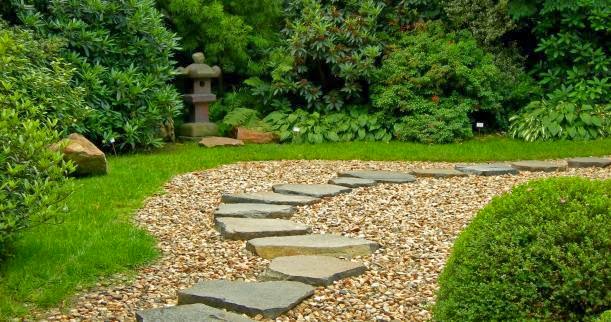
Basic Design Elements
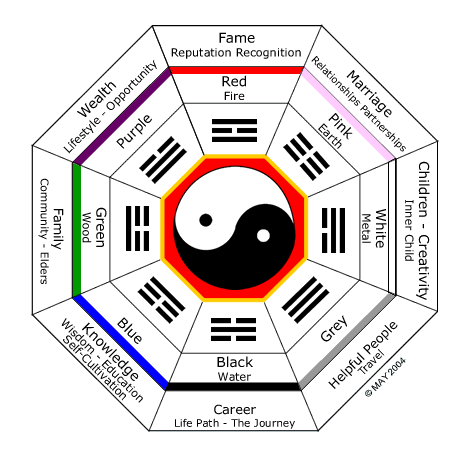 Some of the more major philosophies that govern the basic design elements of Chinese gardens involve a balance of yin and yang (found in the Taoist philosophy) as well as Feng Shui, which involves the placement and location of objects. Typically, the most basic elements that exist in a Chinese garden are a mound with a tree, a pond, rocks, and a wall. Pathways are also prevalent, and are typically determined by the placement of a main pavilion viewing area, though your home can certainly act as a pavilion stand-in.
To start building your Chinese garden, keep in mind that its basic shape starts with mounds/hills and pools of water. These go hand in hand, as when you’re building your mounds, the recesses they leave should be filled in with water to create little ponds or streams. From there, you can bring in your plants (including your tree/s to sit atop your mounds), and finally, rocks to add a more sculptural element. Asymmetry is an aesthetic typical in Chinese gardens, though Feng Shui determines most of the placement of elements. Creating small sections within your garden is also a common practice as is the integration of incense within the scenery for an extra-soothing and other-worldly effect.
Plants and Trees
The plants found in Chinese gardens are largely symbolic and include the lotus flower, pine trees, bamboo, flowering plum trees, chrysanthemums, sweet olive trees, peonies, and banana trees. Bamboo is probably the most often associated with a Chinese-like aesthetic, and is meant to symbolize strength, resilience, and integrity. Pine trees, similarly, is meant to represent persistence, strength, longevity, and stoic dignity.
Like bamboo (which interestingly enough is a type of grass) and pine, the flowering plum tree blooms in the wintertime and carries yet another complimentary message of resilience. It’s one of the most important flowering trees in Chinese gardens in that it even has an association with a revolutionary struggle, a nobleness, strength of will and renewal in the midst of adversity. Lotus are important as well, given their associations with Buddhism, and chrysanthemums are associated with Confuscianistic sacrifices that involve courage and splendour in getting in touch with nature, not to mention that they also have a nice autumn bloom. Peonies represent wealth and power, while banana trees are often used just for their pleasant relaxing sound they make while being blown in the wind.
Other flowers and plants you might want to consider using that will blend well aesthetically include camellias, cherry blossom trees, willows, jasmine, climbing roses, ginkgos, maples, and flowering peach trees, comparable to flowering plum trees in that they also bloom quite late after the spring season.
.jpeg) |
| Chinese Boxwood Bonsai |
Rocks and Water
Water and rock are often juxtaposed in the spirit of yin and yang, balancing opposite textures and elements. Though rocks are instrumental in creating a framework for the garden’s overall architecture, they can also be used in more of an ornamental manner. One type of rock that is commonly used is the Taihu rock, which are really a sort of limestone, and have a sort of weathered and rough look about them that can change slightly in appearance, depending on the lighting. Symbolically, they are meant to represent the supernatural and can be meant as an enticement of spirits to be present in the garden so as to bestow a sense of immortality and wisdom.

The layout of water typically stems from one larger pond, adjacent to a mound, and a series of subsequent smaller streams that originate from this larger body. In general, water is supposed to add a cooling and serene element meant to also reflect the changes in the sky above as well as the surrounding rocks and plants. If you have enough space, you can even add a little bridge to cross a small stream, which is a great feature for contemplation in close proximity to your bodies of water. Adding colourful fish like goldfish, Koi (though, these are Japanese), carp, and if you really get into it, mandarin ducks, are all fauna that will blend nicely into your garden, and will especially benefit from the ponds and streams.
I bid you adieu my dear Sirs and Madams!


.jpg)


