Showing posts with label Money Saving. Show all posts

Wednesday, 7 May 2014

Beginners Guide: Ground Source Heat Pumps, an untapped domestic resource


Ground source heat pumps use pipes which are buried in the garden to extract natural heat from  underground by pumping water through it. The heat pump then increases in temperature, and heat can then be used to heat radiators, underfloor or warm air heating systems and hot water in your home.

"How do these fandangled contraptions work?!"


Don't worry technophobes its quite simple! A ground source heat pump needs electricity to run, but the idea is that it uses less electrical energy than the heat it produce. It circulates a mixture of water and antifreeze around a loop of pipe – called a ground loop – which is buried in your garden. The water and anti-freeze is pumped around the ground loop and absorbs the naturally occurring heat stored in the ground. The pump itself consists of 3 essential components; the evaporator, a compressor and a condenser - together these take the heat from the water mixture, transfers it to your domestic heating system i.e. your radiators and increases the temperature in the process. A ground source heat pump increases the temperature from the ground by between one and a half and four times – if the ground temperature is 12°C, the output would be between 18 and 48°C so you can say good-bye to those chilly winter mornings! And the best thing is the ground stays at a fairly constant temperature under the surface, so the heat pump can be used throughout the year – even in the middle of those harsh winters.

Will they ruin your garden?

No, not intentionally, unless the machines rise and have a thing against your flower garden! Joking aside; The length of the ground loop depends on the size of your home and the amount of heat you need. You'll need sufficient space for installation of the system, generally with a garden that's accessible for digging machinery. Longer loops can draw more heat from the ground, but need more space to be buried in. If space is limited, a vertical borehole can be drilled instead.

Other Things to Consider when installing Ground Source Heat Pumps


  • Is your home well insulated? Since ground source heat pumps work best when producing heat at a lower temperature than traditional boilers, it's essential that your home is well insulated and draught-proofed for the heating system to be effective.
  • What type of heating system will you use? Ground source heat pumps can perform better with underfloor heating systems or warm air heating than with radiator-based systems because of the lower water temperatures required.
  • Is the system intended for a new development? Combining the installation with other building work can reduce the cost of installing the system
  • Your existing fuel system. Savings will be greater if you replace an old or expensive heating system (like oil, LPG or electric heating) than if you are connected to the mains gas grid.
  • Water heating. You may need a separate electric immersion heater.


Lets get down to the important stuff, MONEY


Ground source heat pumps (GSHP) differ in size and complexity, so pinpointing a typical cost is tricky. The Energy Saving Trust (EST) estimates it can range between £11,000 and £15,000 to install one in your home. 
The payback period (the time it takes for the initial cost of the system to be recouped in energy savings) is also difficult to predict, as it depends on how efficiently your system works, the type of system you're replacing, whether you can get financial support with the Renewable Heat Incentive and how you'll be using the heat generated from the pump. Things to consider are:
  • A new build property will be generally more suited to a GSHP for retrofitting and RHI etc. 
  • How well insulated your home is.
  •  What you will be using the GSHP for as it is more suited for lower heat temperatures like radiators and underfloor heating
  • Running costs can be higher if you're also using the system for your hot water supply, and you may require a supplementary electric immersion heater to keep up with your heating needs.

The EST estimates that an average performing ground source heat pump could save you:

  • between £650 and £1,035 a year to replace oil-fired heating
  • between £1,265 and £2,000 a year to replace electric heating 

Financial help is also available. The Renewable Heat Incentive (RHI) is a government scheme and the EST estimated it could provide an additional £2,325 to £3,690 a year which is big money.
What RHI can do for you

Pros of ground source heat pumps


  • Ground source heat pumps generate less CO2 than conventional heating systems which means they are eco friendly, no protesters outside your door!
  • The Energy Saving Trust (EST) says that a 'typical' ground source heat pump could save you between £395 and £2,000 a year depending which existing heating system you are replacing, either way it is a considerable amount of money worth taking back from those dastardly evil energy companies 
  • You can get financial help towards the cost of a ground source heat pump. The Renewable Heat Incentive scheme provides payments to householders who have a heat pump, estimated to be between £2,325 and £3,690 a year for an average four-bedroom detached home.
  • You need to use electricity to power the pump which circulates the liquid in the ground loop, but for every unit of electricity used by the pump, you get between two and four units of heat – making this an efficient way to heat a building.
  • Cheaper Economy 7 electricity tariffs can be used to lower the cost of electricity to power the heat pump, and special heat pump tariffs may be available from some electricity suppliers – alternatively consider solar photovoltaic panels or a wind turbine (if you live in a suitable area) for a greener source of electricity.

Cons of ground source heat pumps


  • Installing a ground source heat pump is expensive – typically £11,000-£15,000, depending on the size of the system (not including the cost of fitting under-floor heating, if required) BUT, don't forget that you can make your money back, all that money is an investment
  • Ground source heat pumps are generally not suitable for properties with existing gas-fired central heating as the technology works at lower temperatures, making it better suited to homes with underfloor heating.
  • The groundworks required to dig the trench can be expensive and disruptive – planning permission may be required if space is at a premium and you need a borehole. Ground source heat pumps tend to be better suited to new-build homes as they can be planned as part of the construction process.
  • You still need to use electricity to drive the pump, so a ground source heat pump can’t be considered completely zero-carbon unless this is provided by a renewable source, such as solar power or a wind turbine.


Will you be doing your bit in saving the environment?

A Ground Source Heat Pump can help in lowering your CO2 emissions, reducing your carbon footprint by a considerable amount, helping you go down a few shoe sizes! According to the EST, a heat pump with mid-range efficiency uses a third of the energy needed in an average gas or oil boiler to produce the same amount of heat. Added up over a number of years this a significant amount so yes, you will be saving the environment you nice lovely people.
Its in our hands

Are you considering Ground Source Heat Pumps? Visit our website here to get a FREE reliable quote. Its quick and easy and based on our database we can give you the top 3 companies in your area that can do it for you http://www.heatpumpquoter.co.uk

I bid you adieu my dear Sirs and Madams!

Tuesday, 1 April 2014


Are Ikea's solar panels a good deal?

Solar quotes - click here

Swedish home furniture giants Ikea are to begin selling solar panels in all 18 UK based stores within 10 months, following a successful trial period, but do they offer value for money and should you even consider buying solar panels from a furniture store?

Firstly, their price of £5,700 for a 3.36kW system, which is the size for a typical semi-detached property, is expensive. Comparing prices from accredited solar installers shows that a larger 4kW system can now be installed for under £5,000, and a 3kW system for as low as £4,000. Though Ikea have to start somewhere

On the plus side the investment figures still stack up, with Ikea's smaller 3.36kW system, on a south-facing roof in Southampton, forecast to earn £770 each year from the Government Feed-in-Tariff (guaranteed for 20 years) - meaning you can recoup the cost within just 7 years.

Though installing the same size system for a lower cost from an accredited solar installer makes more sense and will give you a shorter repayment period.

From a personal opinion, Ikea are making a smart move, they have seen the Solar Panel business on the rise and must be expecting a big boom soon like the rest of us. Hence the first UK solar advert airing last week and the noise Solar has been making in the news recently


Monday, 31 March 2014

Solar Panels, not just for your average Hippie?


Solar Power was once deemed only for the eco-green world, TO SAVE THE PLANET and so on. Not to be taken so seriously by your average Joe. But times are changing and it's becoming a big financial gain, becoming more public with 500,000 UK roofs with Solar Panels, its about time it got fully advertised.
First UK Solar advert to air here

The UK saw it's first Solar Panel advert recently from Eclipse Energy, right after everyone's daily dose of Emmerdale! Though a tad cheesy it proves that Solar Power is a more serious, mainstream business. Being targeted at the general, public ideally wanting to save a few quid!


Pioneering the way forward in the Solar Panel business is Chris Cash (Managing director of Eclipse Energy) who thinks that marketed the right way, it can become big industry. And rightly so! Solar Power is accessible to almost any home-owner with many rewards and benefits. Cash is paving the way forward showing the average Joe how Solar Power can help them.

Many other companies are stepping forward into the 'light' that Cash has so kindly shown, with companies like Spectrum Energy talking about their adverts coming out soon. The Solar business is finally coming into it's own. It has been steadily rising for a while now and I won't be surprised after a mass of adverts that it will finally hit it's stride, making solar industry boom!


What You Need to Know Before You Insulate Your Home


Insulating your home not only helps you to cut down on energy bills but also plays a crucial role in ensuring that your house is warmer and comfortable all the time. Insulating an old house is however quite tricky. You therefore need to be extra cautious when adding insulation because any slight mistake can compromise on the overall performance. Do you want to insulate your old house now? Well, here are some tips on what you should know before you decide to insulate your old home:


 Be sure that your home need insulation

This is actually very important. Think of it in the perspective that you have wasted your time and resources insulating what needed no insulation. You definitely will feel wasted. So how can you ascertain that your home needs insulation? To begin with, you need to check if you have insulation. Check your exterior walls if they have patched holes and if they do, then this is an obvious sign that there is a blow- in insulation. Similarly, check fireplaces and chimneys to ascertain if you are losing heat. Once you have the facts right, then you can go ahead to insulate your house! 

 What about the existing insulation?

Your house may be insulated but you feel that it is not up to your standards. Before you decide to do away with the existing insulation, get to know the materials used to insulate your house. If you suspect that the material used is asbestos, you need to have the material tested. This is because complete removal of asbestos has serious health concerns and would be better if left the way it is. By comparing to new home, you will certainly realize that old homes need to be insulated. This is because most new homes have been constructed with special attention and thus are effective. But again be cautious about the materials used.

The form of insulation you need to use

Building insulation is classified into four broad categories namely: rigid boards, loose fill, batts and expanding sprays. For major restorations such as replacing walls, rigid and batt insulation are the most suitable. The most commonly used installation is loose fill because it reaches places where other insulation cannot reach. It is therefore prudent to know which insulation to use and when.

The amount of insulation required

InsulationR-value is what matters here. The lower the R-value, the worst the material insulates and vice versa. The smaller values are appropriate in warm weather places while the high value ones are appropriate for chilly climates. It is therefore advisable that you know your place and the type of R-value required.

 Where to install insulation

This will vary from house to house. Most heat loss occurs through the roof and since cool air has a tendency to fall and warm air to rise, it would be ideal to begin insulation at the loft. In case the loft is not finished, then insulation has to be done on the floor. However, you should be extremely vigilant to only insulate when there is a good ventilation path between a building exterior and the insulation. Also take note not to place thermal insulation around old wiring.

With these tips on your mind, you are certainly going to insulate your house in the right manner. Staying warm is all you need and thus you should act appropriately. Do not let yourself stay in the cold while all you need to do is to insulate your house. But again, before you insulate understand the tips above.


Friday, 28 March 2014

Solar powered Air Source Heat Pump pays you twice


It makes sense to be as self-sufficient as possible when it comes to energy. Self-generated energy is far cheaper and greener as it comes from renewable sources.

Two of the most popular renewable technologies are solar PV panels and Air, or Ground Source heat pumps.  While PV panels generate electricity, heat pumps use electrical energy to extract more heat energy out of the air and the ground.

Combining the two it's possible to use free electricity from your Solar PV Panels to provide the power used by your air or ground source heat pump.

Installing both means you will potentially qualify for both Solar PV feed-in Tariff and the RHI payments for your Heat Pump - leveraging a multiplier from one, to power the other.  What could be better than that?

RHI grants are paid over a 7 year period, and PV feed-in-tariff is paid over 20 years while slashing your your heating costs by at least 50% against Oil or LPG and up to 30% against gas.

Should your PV panels not produce enough electricity, the mains electricity grid will simply take over and keep things running - getting the water and electricity still 50% cheeper than using an immersion heater.


Have you installed solar yet? Find prices for your home here.
Find prices on heat pumps for your home here.

Explaining the increasing popularity of conservatories


With conservatory companies reporting record sales this week, its apparent that conservatories are coming back in the trend this year as home-owners look to invest in a conservatory and experience the warm glow of the sun, in the unique way a conservatory provides.


Why the increase in popularity?

Conservatories have always been a versatile living space, especially for families. Being able to act as breakfast/dining rooms, family dens, studies, its extremely convenient for those who need the extra room. Becoming a more and more credible smart investment for home-owners, a conservatory is definitely attracting the majority of home-owners and would explain the rise in sales recently.


How?

Because of this rise in popularity it would suggest that potential property buyers will be looking for houses with a conservatory. Having one can on average increase the value of your home by £9,420! For people looking to sell this would be an almost crucial accessory to have, as it would generate more interest in your property and increase it's value.

Another honourable mention is the obvious excellent placement a conservatory is to have solar panels. Solar power is hugely popular, with earnings and savings up to £750 a year with solar power after the 1st of April. It would seem that coupled with the energy efficiency a conservatory already provides, solar panels would make a tiled-roof conservatory a smart investment for any home-owner as it is the perfect place to have them installed.

All reasons considered, it is certainly undeniable a conservatory would be beneficial for any home-owner, being versatile, attractive and a smart investment. The conservatory is a definite buy.


Find instant online prices for conservatories here.

How much can you earn from solar in your town?


From April 1st the Feed-in-Tariff, that pays you for generating your own electricity from solar panels (whether you use it yourself or not) will drop to 14.38p/kWh, but what does that mean in your area?

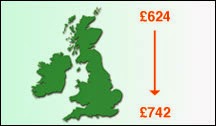
Based on the Energy Saving Trusts' calculations you can see how much you should expect to earn and save in your region each year:
  • Scotland: £624
  • North East: £635
  • North West: £650
  • Yorkshire: £643
  • East Midlands: £655
  • West Midlands: £661
  • Wales: £667
  • East of England: £672
  • London: £688
  • South East: £718
  • South West: £742
Remember, these are estimates for a 4kW system, and the FiT is index-linked and should increase year upon year with inflation.

Not installed solar panels yet? Find prices here.

Thursday, 27 March 2014

Popularity rise in Solar Power, why?

Solar Power

Solar Power has grown incredibly in the recent years; with Britain now having 500,000 homes with Solar Panels, the business is booming! The general public are definitely opening their eyes to the brilliant benefits and opportunities that Solar Power has to offer.

Did you know Butterflies have Solar Panels on their wings? 

Financial benefits

Solar Panels obviously offer to cut down your electricity bills by becoming more dependent on solar power. The ever increasing prices of energy providers is clearly making people looking into Solar Power as it is an easy, cheap way of saving money. Also with the feed-in-tarrifs the government currently provides it makes it possible to earn up to £750 a year! Who doesn't want extra money in their back pocket? From the financial side of things, Solar panels are definitely a great benefit to home-owners looking to save money.

Feel good factor
Look how smug he is after his Solar Panel install

Solar Power is a clean, renewable energy which makes it GREEN! You can feel smug as you tell the world of how you produce clean energy which is potentially saving the Planet. Also speaking from personal opinion, there is nothing that makes you happier than seeing how much energy you're producing, and there is nothing that makes me look weirder than grinning insanely when I see that electric bill cut down to size!

The Buzz!

There is massive spike in the amount Solar Power is making into the media recently. Various government projects getting behind Solar Power like how the U.S. Navy plan to beam down energy from orbiting Solar Panels. Or even how one of Britain's biggest landmarks, Big Ben, could possibly be getting Solar Panels (Story here).


Mad Scientists
There is also gigantic leaps in the technological side of the Solar Panel world. With 'mad' scientists developing transparent solar panels, Solar panels that work better on cloudy days ! And even the revolutionary idea of the near possibility of being able to grow solar panels from BACTERIA. ITS ALIVE!!!


With all these contributing factors, it's no surprise that Solar Panels have been on the rise. There has never been a better time to get into the Solar Powered world, with so many people getting involved now, shouldn't you as well? If anything you have read has interested you in Solar Panels, visit this excellent site here for a FREE quote on Solar Panels ! 

Links:
All links to the stories can be found above. If none work I will post them down here too

Friday, 4 December 2009

Last Chance To Get One Over the Taxman

There’s still time, just about, to get your home improvements project planned, quoted and sorted before VAT rises. With the help of WindowQuoter, you can get a head start straight away.

On New Year’s Day, the Treasury will raise the basic rate of VAT back to 17.5%, from the 15% it has stayed at since November 2008.

Whilst the change in cost of small-to-medium purchases is going to be fairly small and unlikely to cause too much heartache, some home improvements can represent a large outlay, and you could save hundreds of pounds.

If you start your project today, your supplier can make savings on parts and materials – so you don’t necessarily have to have completed the entire project before New Year in order to reduce your costs significantly.

You’ll need to get moving quickly, though – and the quickest way to get started on your home improvement project is to get a quote from our network of Quoter websites.

Our sites will help you find guide prices on a wide range of projects, including for glazing, paving, fitted kitchens, bedrooms or bathrooms or even larger projects such as garage conversions or loft conversions.

And after getting your guide price we offer to help you find three local suppliers from out trusted network to perform a site survey and give you a firm quotation – which will be valid for 6 months and comes with no obligation.


But don’t wait around – this really is your last chance to get a project completed before the new year comes in, bringing the new VAT rate with it. Give WindowQuoter a go today and start saving money straight away.


REMEMBER TO READ OUR MOST RECENT BLOG POSTS CLICK HERE