Showing posts with label insulation. Show all posts

Friday, 18 July 2014

Are Biomass Boilers worth it?

Photo Credit: Pooja Chaphalkar
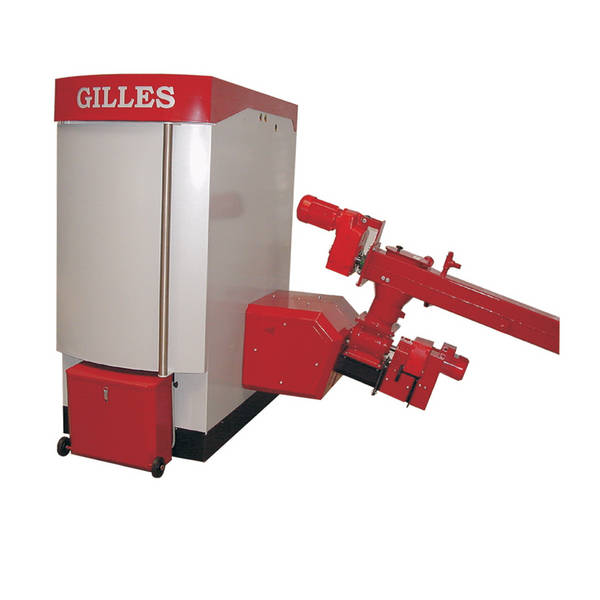
Biomass boilers offer a great heating solution that really does pay for itself and then some. Combined with the great savings to be made with biomass fuels and the government’s domestic Renewable Heat Incentive (RHI), it really does make sense to look at biomass for your home. It's an exciting bit of tech to get on and I strongly recommend it. As you can see from the picture on the right, it's not as big as you would expect.


First things first

Biomass boiler systems are not suitable for every property, small urban and suburban properties (especially flats) are highly unlikely to be able to accommodate a larger biomass boiler, hopper and buffer vessel, and are therefore better suited to other renewable energy technologies such as solar PV and solar thermal or even a wall mounted air source heat pump. Even with those urban and suburban properties that do have enough space for the biomass installations, there may still be access issues when it comes to taking delivery (and more importantly storage) of the wood fuel, normally delivered on a standard sized pallet.
Photo Credit: Stéphanie Kilgast
For homes and businesses with the requisite space, however, biomass boilers are likely to be suitable and can provide substantial financial savings, as well as a significantly lower carbon footprint. Biomass systems with an output of 5kW to 500kW can be used in a variety of settings, both residential and commercial, from a small office building to large buildings such as hospitals, schools and prisons. Biomass boilers are also a particularly attractive option for properties with no mains gas supply.


Biomass Boiler

For those off-grid properties, biomass is a much cheaper fuel to run your heating on when compared to heating oil or Calor gas. Even when compared to heat pumps, the closest renewable competition, biomass generally wins.
While you can install a heat pump (air source or ground source), there is a difference when compared to biomass (heat pumps operate at much lower temperatures), which will mean that you will have to slightly change how you distribute your heat – by increasing the size of your radiators and / or consider installing underfloor insulation (the latter is not mandatory).
Therefore the big advantage over heat pumps is that you can install a biomass boiler with your existing radiators and hot water system as they operate at high temperature and do not require as big an output to provide the same volume of useful heat.
Even if you are on grid, you can still benefit from a biomass boiler – as long as you have the space and are not in a clean air zone (it is very restrictive to use in urban areas of London). Even comparing the cost of gas to biomass fuel can be favourable, especially when you factor in the RHI payments.

Insulation isn't as important?

As mentioned, heat pumps are the other way to get RHI funded heating, but because they produce lower grade heat, they don’t tend to work well with a traditional radiator system and you will probably need to install additional insulation to bring the heat demand right down to be worth it.  Insulation is cost effective if you have a cavity wall property, but if it is of solid wall construction then you will need to consider getting expensive insulation, and the costs will start to add-up.
Biomass has the added advantage of not needing a super insulated house – although we advise on always trying to get the best possible insulation. Where heat pumps rely on high quality insulation to function effectively, costing thousands of pounds, biomass will work well in any home, with just your basic loft and cavity wall insulation as always, recommended. In fact, you will actually get more money as part of the RHI when your property requires more heat to warm it – but loft and cavity, if recommended on the Energy Performance Certificate (EPC), must be installed!

How much can I earn with Biomass on the RHI payments?

The RHI will pay you 12.2p/kWh and the amount you get will depend on the heat demand on your EPC. A typical property with a heat demand of about 20,000 kWh will receive more than £2,400 a year; or £17,500 over a 7 year period. That’s a lot of money and will cover the cost of the installation well before the end of the life of the boiler.
To demonstrate how the RHI payments can work with real properties out there, we have selected a range of property’s we have assessed and have summarised the typical heat demands and therefore the expected payments.
 In reality to see how much your property will get, you need to look at the last page of your EPC. Look at the heat demand combined with the water heating requirements then multiply by the tariff (12.2p/kWh). Generally speaking, smaller terraced properties are unlikely to have the space required for one of these boilers, but for larger properties, the returns are very generous. 
Free Biomass quotes here: http://www.biomassquoter.co.uk/
I bid you adieu my dear Sirs and Madams!

Friday, 9 May 2014

Thatched Roofs, more durable than a Nokia 3310?!

The Nokia 3310 is internet famous for being 'indestructible' and theres no roof better to pair it with than the thatched roof. Thatched roofs have been around for centuries and there's an obvious reason why. They simply work! Laid in the traditional way, will last up to 50 years! Not only is it aesthetically pleasing, it keeps you dry and warm as it is an excellent insulator, the thatched roof is the champion of roofs! and I think it deserves more acclaim so I am here to tell you why the thatched roof is for you!

The Basics

What is Thatch?

Thatched Roof Close Up
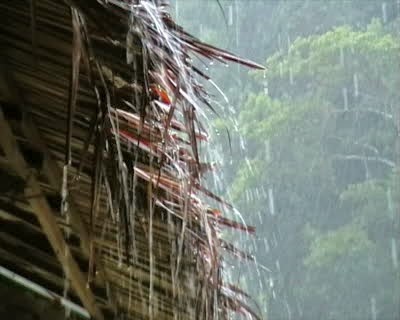
Thatch is a natural reed and grass which, when properly cut, dried, and installed, forms a waterproof roof. Traditionally thatchers use locally available materials. If local farmers were growing wheat, then wheat reed or straw was used. Rye, barley and oat straw, and even heathers have been used. In wet lowlands, sedge has been a traditional thatch, particularly for ridging material.

The most durable thatching material is water reed (Phragmites Australis) which can last up to 60 years.  
The Shannon River and its tributaries used to produce an abundance of water reed. It still does, but increased run off of farm fertilizers in the last two decades have all but ruined this traditional source of reed. When bathed in nitrates, water reeds grow longer and faster. They become much more brittle and are easily snapped. Their useful lifespan on a roof is also shortened tremendously.

Thatch can be dressed into unusual shapes, indeed. In this picture, the thatch flows around the roof line of an old traditional cottage, lifting for a window, then sweeping down to cover the rounded corners.

Today 3 different materials are widely used:
  • Long straw
  • Combed wheat reed
  • Water reed
The type of reed used will determine the style of finish. Your thatcher will advise accordingly. In essence, Long Straw retains a `shaggy` look whilst Combed reed is widely used in the south and west of England. Water reed, traditionally costs more but is regarded as a superior product.


How does thatched keep out the rain?


Water reed is naturally waterproof. This is no waterlogged plant, soggy and bloated with water. In fact, the inside of a natural water reed is hollow. The water is kept out by the tight overlapping of cells on the plant's outer layers. If you bundle enough of these water shedding plants together, water simply cannot penetrate. Moisture typically does not absorb into the thatch bundles more than 1 or 2 inches.The thatchers' art consists of carefully laying 5 to 6 foot bundles of reeds atop one another so that an impenetrable shell of waterproofing covers a roof. Each thatch layer is built up to a thickness of around 12 inches and gravity carries rain, sleet, and snow down and off the roof.


What about ventilation and insulation?


One of the great attractions of thatch is that is extremely thermally efficient – warm in winter and cool in summer. Unlike conventional roofing systems that trap heat and moisture vapour in attics, thatched roofs require no attic ventilation.


A water reed thatched roof, 12 inches thick at a pitch angle of 45 degrees meets the most modern insulation standards. The scientific term for insulating properties is "thermal conductance," known as the U value. The U-value of a properly thatched roof is 0.35, which is equivalent to 4 inches of fibreglass insulation between the joists. Only in the last decade have building codes begun to demand this level of roof insulation. Yet, thatch has been providing such a "modern" value for hundreds of years.

An added benefit is that thatch is a much more effective sound insulation than fiberglass. An inch of thatch will stop a microphone from picking up sounds.


Will thatch stand up to strong winds?


It maybe just reeds but they actually cope quite well! Modern thatching methods make thatch one of the strongest types of roofs, certainly one better able to handle high winds than common asphalt strip shingles. Note that the roof timber work and laths seen in this photo were constructed by The Thatch Company.

Before the thatch is placed on the roof, long brass screws are firmly inserted deep into the wooden roof laths. Twisted onto the screw is a long, heavy duty steel wire. Bundles of reeds are then placed onto the roof. Over the bound reed bundles steel rods are placed. Then the wire which is secured to the lathing is tied through the reeds to the steel rods. The result is a natural water-repelling material firmly bound by steel rods and wires to the roof laths and joists.

Of course, you won't see the steel rods or wires since these are buried 5 to 6 inches below the top reed layer. The result is a light yet extremely durable, steel tied roof. It's not going anywhere! This picture is a hotel in Kinvarra, County Galway. You are looking at the largest thatched roof in Ireland. During the 100 + mile per hour winds of the 1998 St. Stephen's Day storm, not a reed was out of place. This despite the serious damage done to many slate roofs in the area.It should be noted that when rethatching and conserving older buildings, The Thatch Company does not use steel, but the more traditional (and quite effective) wood spar system. Check out our rethatching page for more details.

Benefits of Thatched Roofs


  • A properly, professionally installed thatched roof which is maintained on a regular basis and sited away from any overhanging trees will offer great durability. You can expect thatch to last anywhere between 15 to 20 years in good condition.
  •  Being a naturally insulating material, thatch is able to insulate your home without the need for additional insulating materials in the loft space such as natural or synthetic wools. A good insulator will not only keep your home warm in the winter months but will also keep it cool during the summer.
  • Thatch changes with age, and as it settles in it will begin to darken. This helps it to blend with the surrounding countryside, creating a sense of harmony and belonging which more boldly coloured and textures tiles and slates cannot offer. This makes thatched roofs perfectly suited to more rural locations, although it is just as attractive in towns and villages.
  • Thatch is highly environmentally friendly, and is one of the best eco roof types around. The materials needed are grown easily and harvested with little to no machinery. Whilst thatched roofs are more labour intensive to source and construct than some other options, most of the materials are sourced from rural communities which benefit greatly from the work created.
  • One of the most interesting characteristics of thatch is its ability to be shaped into natural, flowing forms unlike the harsh lines that tiles create. This adds great character and personality to a house, and allows you a lot of freedom when designing the shape of the roof.
  • Thatching your roof is a fairly low cost method of adding on space to your home by utilising roof space which would otherwise form a loft. Additionally, the high, open ceilings create a very spacious feel to the rooms.

The Cons

  • Due to the very heavy labour intensiveness of installing thatched roofs, they are generally a little more expensive than alternative roofing materials might be.
  • When it comes to insuring your home, you must expect to pay a premium due to the higher cost of the material and its tendency to dry out and become highly flammable if not properly maintained.
  • You will have to carry out an annual inspection of thatched roofs to make sure that any necessary minor repair work is carried out as soon as possible, as this will prevent you having to undertake much more expensive repairs further down the line. The ridge cap – which is the part of the roof that is most abused by the elements – will need to be seen to a little more often in order to prevent any leaks from opening up and to maintain the structural integrity of the roof in general.
  • It is important to make sure that thatched roofs are located away from any overhanging trees. This will stop the material from drying out too quickly, which can be hazardous. Also, if thatch is left too damp for too long then it will become susceptible to rot and fungal growths.
  • Thatched roofs must be regularly treated with fire-retardant, especially during the summer when the weather can cause thatch to become easily ignitable. The treatment of thatch is based on the impregnation of the material with a combination of biological preservative and fire retardant.  The risk of fire cannot be forgotten, and many professional thatchers recommend that a fire board is used for added safety.


Buying a Thatched Property

All too often prospective owners of thatched houses are persuaded by family and friends that owning a thatched property is expensive and requires constant attention. This is not the case.
Thatching Advisory Services are able to offer a range of services that will indicate, before you exchange contracts, the immediate costs, future planning and of course the benefits of owning a property that is part of our National Heritage.

SURVEY OF THE THATCH ONLY - Carried out by thatch surveyors employed by Thatching Advisory Services which will confirm exactly in writing the condition of the thatch, what precautions can be taken to extend the life expectancy of the roof and indicate the current price of the works to be undertaken.

Will a thatched building hold its value?

Yes! Homes with thatched roofs command higher selling prices than similar ones with tile or slate.Thatch is also very effective in commercial settings such as restaurants, hotels, pubs, and retail shops. If you're trying to tempt motorists into your commercial establishment, thatch beckons more convincingly than neon.


'How much is it going to cost me?'


Distinction carries a price, but not an unacceptable one. A typical thatched roof costs more than its cement tiled or slated roof counterparts. But, since the carpentry and wood work needed to support a thatched roof is less expensive, overall costs are comparable. Further, there are no gutters, downpipes, soakaways, soffit boards, or the need to paint and maintain these items.In this picture you'll note the detailing over a window. The cut of the thatch and the direction in which it is laid helps shed water to the sides and not onto the window below.


Insurance


There is no problem getting insurance on your thatched building. The Thatch Company has been certified by one the world's largest insurance companies and they are willing to provide cover for buildings which we thatch and fireproof. The cost to you is generally the same as that required for a similar building with a conventional roof.


Thats about as much as I know on the subject matter, 

Until the next time, I bid you adieu my dear Sirs and Madams!


Monday, 31 March 2014

What You Need to Know Before You Insulate Your Home


Insulating your home not only helps you to cut down on energy bills but also plays a crucial role in ensuring that your house is warmer and comfortable all the time. Insulating an old house is however quite tricky. You therefore need to be extra cautious when adding insulation because any slight mistake can compromise on the overall performance. Do you want to insulate your old house now? Well, here are some tips on what you should know before you decide to insulate your old home:


 Be sure that your home need insulation

This is actually very important. Think of it in the perspective that you have wasted your time and resources insulating what needed no insulation. You definitely will feel wasted. So how can you ascertain that your home needs insulation? To begin with, you need to check if you have insulation. Check your exterior walls if they have patched holes and if they do, then this is an obvious sign that there is a blow- in insulation. Similarly, check fireplaces and chimneys to ascertain if you are losing heat. Once you have the facts right, then you can go ahead to insulate your house! 

 What about the existing insulation?

Your house may be insulated but you feel that it is not up to your standards. Before you decide to do away with the existing insulation, get to know the materials used to insulate your house. If you suspect that the material used is asbestos, you need to have the material tested. This is because complete removal of asbestos has serious health concerns and would be better if left the way it is. By comparing to new home, you will certainly realize that old homes need to be insulated. This is because most new homes have been constructed with special attention and thus are effective. But again be cautious about the materials used.

The form of insulation you need to use

Building insulation is classified into four broad categories namely: rigid boards, loose fill, batts and expanding sprays. For major restorations such as replacing walls, rigid and batt insulation are the most suitable. The most commonly used installation is loose fill because it reaches places where other insulation cannot reach. It is therefore prudent to know which insulation to use and when.

The amount of insulation required

InsulationR-value is what matters here. The lower the R-value, the worst the material insulates and vice versa. The smaller values are appropriate in warm weather places while the high value ones are appropriate for chilly climates. It is therefore advisable that you know your place and the type of R-value required.

 Where to install insulation

This will vary from house to house. Most heat loss occurs through the roof and since cool air has a tendency to fall and warm air to rise, it would be ideal to begin insulation at the loft. In case the loft is not finished, then insulation has to be done on the floor. However, you should be extremely vigilant to only insulate when there is a good ventilation path between a building exterior and the insulation. Also take note not to place thermal insulation around old wiring.

With these tips on your mind, you are certainly going to insulate your house in the right manner. Staying warm is all you need and thus you should act appropriately. Do not let yourself stay in the cold while all you need to do is to insulate your house. But again, before you insulate understand the tips above.


Wednesday, 8 September 2010

Home Improvement News Headlines in Brief

This weeks Home Improvement News headlines in brief:

Autumn the "season of home improvement' says National Council:

This is Autumn is being dubbed the 'season of home improvement' by the National Home Improvement Council, who predict that homeowners will will be paying particular attention to their home's insulation and energy efficiency in case of another severe winter.

The story, highlighted by Insurers AXA reckons that last years winter - the harshest for 30 years - will see homeowner's focused on making their properties more resilient to extremes of weather.

Think back to last Winter - cars were stranded, emergency services struggled to reach people and when pedestrians had to resort to crawling across icy roads just to cross the street.

AXA's director of protection marketing reckons the focus should be on educating people to think about how things may interrupt their daily lives. This includes ensuring that their homes (both buildings and contents) as well as themselves have enough cover to lessen the effect of any future crisis. be that property related or medical related - many people were injured during the bad weather and unable to work as a result of their injuries.


When is a local company not a local company:

Sometimes, we see feedback from a homeowner questioning the fact that one of the companies we've been able to recommend to them isn't local. This can raise doubts as to the credentials of the company concerned. Part of our service, after all, is trying to find you up to 3 local companies to confirm your online enquiry in writing.

Rest assured, the system is working. What's happening is a company will have only entered their 'head office' details in the contact details a homeowner sees, when they login to their secure area to see which companies we're recommending their details to.

We deal with both national and local companies to try and give you as broad a spectrum of comparison quotes as possible. So even though a larger company may show an address many miles from you, sometimes in a completely different part of the country, it'll be a local branch that will respond to your enquiry and if you go ahead with them, ultimately carry out the work too.


Kitchen Quoter feedback - straight from the horses mouth:

"Just wanted to say, how brilliant my kitchen is now looking, Matt did a great job, he was very efficient, professional, polite, friendly and humourus. As he carried out the work and kept me informed of the progress, he also kept within my budget!! I would recommend him to anyone wanting to put together a new kitchen, he was not only helpful in his ideas (due to experience), but guided us to some things we had not thought of!! Brilliant workmanship!! Well Done Matt & and a big thank you!! "

To get your online Kitchen Quote - click here and visit Kitchen Quoter.


REMEMBER TO READ OUR MOST RECENT BLOG POSTS CLICK HERE