Showing posts with label biomass. Show all posts

Wednesday, 25 February 2015

Top 3 boilers in the UK

In Britain we are facing harsher climates every year, and our boilers are our last line of defence when facing freezing temperatures.

However, they do have a slight tendency to break down when we need them most, and replacing boilers are tricky business. There are many boilers out there all with their own unique benefits, so how do we know which one is best for our personal needs? Here's a breakdown of the top 3 types of boilers available in the UK.

Condensing Boilers

Condensing boilers are by far the most common boilers in domestic households. The main attraction to them being far more efficient than the old mains gas boilers by being able to retain 90% of the heat it produces. 

Usually containing the hot and cold water tank in the same unit is also what makes this boiler appealing as there is always going to be a steady supply of hot water coming out of the tap. The only downside is that because it's a smaller unit the maximum pressure isn't all too powerful.

Photo Credit: Adem Djemil

Oil Boilers

Oil boilers are not as popular, only being in an estimated 4 million UK households. This is mainly down to their inefficiency costing an average UK homeowner up to two hundred more a year than a condensing boiler. Another downside is the regular maintenance of the system can be costly. Thereby making them more of a liability when it comes to the harsher seasons.

Although they can be very effective for larger farm houses. Being very popular in the more countryside areas.


Biomass Boilers

Photo Credit
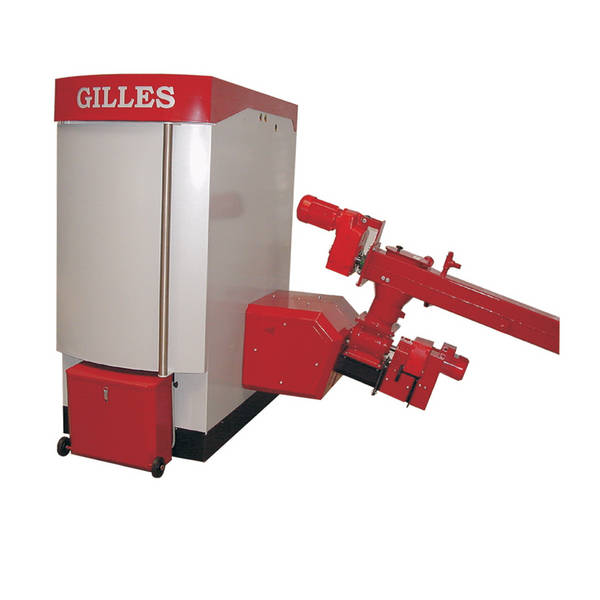
Biomass boilers/wood pellet boilers have grown in popularity in recent years. This mainly down to its outstanding benefits over the other two systems.

Being cheaper to run than the other two, costing you roughly £600p/a is very attractive to super scrimpers of the UK not to mention its highly energy efficient so you won't be throwing your cash out the window when you turn it on!

Naturally there are some downsides to the system. You have to manually clean it, but you can always buy self a cleaning one for a bit more. And the estimates are around a staggering £7,000-£13,000 for a sustainable biomass boiler which might cause you to shy away, but there's still another upside that you have to consider.

The government RHI payments for biomass boilers are definitely a deal breaker. On an average biomass boiler you will get 12.2p/kWh, and the amount you will receive depends on the heat demand on your EPC. A typical property with a heat demand of about 20,000 kWh will receive more than £2,400 a year; or £17,500 over a 7 year period. That’s a lot of money and will cover the cost of the installation well before the boiler's life ends.
If you would like a free no obligation quote for a biomass boiler you can always go through our family of quoter websites. We can give you quotes from the top three installers in your area. Catch onto the RHI scheme now before it's too late! http://www.biomassquoter.co.uk/

Want a different boiler? We have a quoter website for that too! Click here and go through our system.

I bid you adieu my Dear Sirs and Madams!

Wednesday, 29 October 2014

Energy prices on the rise and how to combat it

Once again the energy prices are rising dramatically. Over the past 3 years alone they have risen on average 37% according to the Guardian which means that they are rising up to 8 times the rate of average earnings!

Not to mention 'Which?' warning the treasury that the cost of building power stations, replacing grids and erecting wind farms will add £640 a year to household bills.


All information  sourced from Uswitch website

According to the graph, energy prices have gone up by a whopping 172% in the past the decade alone! Although you could argue that 'all things are more expensive these days' but compared to other sectors like alcohol, water and petrol, energy prices dwarf them all!

Why are they going up?

I don't have to tell you that there are many contributing factors that cause this rise in energy bills, but here are some of the main reasons:


Surely this a sign that we need to transition from fossil fuels to more conservative types of energy? It's a dead end resource and lets face it, we want to be around for a long time, we're humans it's what we do! 

Scientists like James Hansen are crying out warning us that soon that we will reach the point of no return. Why don't they report this properly on mainstream media? The security of our future is being decided now, it is effecting our lives right now, energy bills on the rise, countries facing an unusual amount of environmental disasters. Surely we should be all running around trying to fix this mess?!

The benefits of becoming more independent

Not only will you be cushioning yourself from the dramatically rising energy prices, but you will also be able to make a profit from these renewable energies with the RHI scheme (Read more about RHI here).  Domestic Solar alone can give you returns of up to £17,000 over a 20 year period. What's also important to consider is over the past 10 years how much energy prices have risen, just imagine it over another 20 years! 

The brilliant thing is this means we can weaken some of the almost omnipotent corporations that are causing this environmental slaughter all in the name of making more money, madness. How can one be so self obsessed that they value money over than human life? If we the common man/woman starts to produce their electricity, decrease their dependancy we will see change.

“A single, ordinary person still can make a difference – and single, ordinary people are doing precisely that every day.” - Chris Bohjalian. 
The starfish story is what comes to mind here, and it's true if the majority of us start to have solar panels on our roofs the solar industry will boom. If it does then we will continue to see more and more advancements in the technology, people getting serious about renewable energy and after that only then will we see the benefits it will have on our Earth's climate, energy prices dropping, calm.

Break away from the social norm, decrease your expensive dependency by using renewable energy solutions like solar panels, biomass, Air/Ground source heat pumps. Take matters into your own hands, because THEY won't help you when it comes down to it.

I bid you adieu my dear Sirs and Madams!

Friday, 25 July 2014

Beyond The Mains Newsletter

Hello all my dear Sirs and Madams! Today I would like to introduce you to a great service written by the same people on this blog, Beyond The Mains Newsletter.

It features articles much like what you find on this blog; and it's FREE. It regularly comes out every week ( a little more routine than this...) Featuring great little pieces from windows to renewable technologies, anything Home Improvement related, we do it! Keeping you fully updated on new technologies and government schemes, definitely worth the subscription.

Its perfect for home owners and business owners alike. Are you one of these? Well get clicking my dear.

To the sceptics out there don't worry, we aren't going to spam you or pass on your details. We just want to keep you, our readers entertained and informed, this is just another way of reaching you. I promise my dear Sirs and Madams, no gimmicks.

If you're interested then just click here! I will provide links below as well. Its free and all it will cost you is a click!


I bid you adieu my dear Sirs and Madams!

Friday, 18 July 2014

Are Biomass Boilers worth it?

Photo Credit: Pooja Chaphalkar
Biomass boilers offer a great heating solution that really does pay for itself and then some. Combined with the great savings to be made with biomass fuels and the government’s domestic Renewable Heat Incentive (RHI), it really does make sense to look at biomass for your home. It's an exciting bit of tech to get on and I strongly recommend it. As you can see from the picture on the right, it's not as big as you would expect.


First things first

Biomass boiler systems are not suitable for every property, small urban and suburban properties (especially flats) are highly unlikely to be able to accommodate a larger biomass boiler, hopper and buffer vessel, and are therefore better suited to other renewable energy technologies such as solar PV and solar thermal or even a wall mounted air source heat pump. Even with those urban and suburban properties that do have enough space for the biomass installations, there may still be access issues when it comes to taking delivery (and more importantly storage) of the wood fuel, normally delivered on a standard sized pallet.
Photo Credit: Stéphanie Kilgast
For homes and businesses with the requisite space, however, biomass boilers are likely to be suitable and can provide substantial financial savings, as well as a significantly lower carbon footprint. Biomass systems with an output of 5kW to 500kW can be used in a variety of settings, both residential and commercial, from a small office building to large buildings such as hospitals, schools and prisons. Biomass boilers are also a particularly attractive option for properties with no mains gas supply.


Biomass Boiler

For those off-grid properties, biomass is a much cheaper fuel to run your heating on when compared to heating oil or Calor gas. Even when compared to heat pumps, the closest renewable competition, biomass generally wins.
While you can install a heat pump (air source or ground source), there is a difference when compared to biomass (heat pumps operate at much lower temperatures), which will mean that you will have to slightly change how you distribute your heat – by increasing the size of your radiators and / or consider installing underfloor insulation (the latter is not mandatory).
Therefore the big advantage over heat pumps is that you can install a biomass boiler with your existing radiators and hot water system as they operate at high temperature and do not require as big an output to provide the same volume of useful heat.
Even if you are on grid, you can still benefit from a biomass boiler – as long as you have the space and are not in a clean air zone (it is very restrictive to use in urban areas of London). Even comparing the cost of gas to biomass fuel can be favourable, especially when you factor in the RHI payments.

Insulation isn't as important?

As mentioned, heat pumps are the other way to get RHI funded heating, but because they produce lower grade heat, they don’t tend to work well with a traditional radiator system and you will probably need to install additional insulation to bring the heat demand right down to be worth it.  Insulation is cost effective if you have a cavity wall property, but if it is of solid wall construction then you will need to consider getting expensive insulation, and the costs will start to add-up.
Biomass has the added advantage of not needing a super insulated house – although we advise on always trying to get the best possible insulation. Where heat pumps rely on high quality insulation to function effectively, costing thousands of pounds, biomass will work well in any home, with just your basic loft and cavity wall insulation as always, recommended. In fact, you will actually get more money as part of the RHI when your property requires more heat to warm it – but loft and cavity, if recommended on the Energy Performance Certificate (EPC), must be installed!

How much can I earn with Biomass on the RHI payments?

The RHI will pay you 12.2p/kWh and the amount you get will depend on the heat demand on your EPC. A typical property with a heat demand of about 20,000 kWh will receive more than £2,400 a year; or £17,500 over a 7 year period. That’s a lot of money and will cover the cost of the installation well before the end of the life of the boiler.
To demonstrate how the RHI payments can work with real properties out there, we have selected a range of property’s we have assessed and have summarised the typical heat demands and therefore the expected payments.
 In reality to see how much your property will get, you need to look at the last page of your EPC. Look at the heat demand combined with the water heating requirements then multiply by the tariff (12.2p/kWh). Generally speaking, smaller terraced properties are unlikely to have the space required for one of these boilers, but for larger properties, the returns are very generous. 
Free Biomass quotes here: http://www.biomassquoter.co.uk/
I bid you adieu my dear Sirs and Madams!


REMEMBER TO READ OUR MOST RECENT BLOG POSTS CLICK HERE